science
After Two Decades Mapping the Violent Universe, NASA's RHESSI Telescope Falls Back to Earth
NASA's RHESSI spacecraft, which spent more than two decades capturing high-energy images of solar flares and cosmic explosions, made an uncontrolled reentry into Earth's atmosphere, burning up over the Sahara Desert and closing a remarkable chapter in space science.
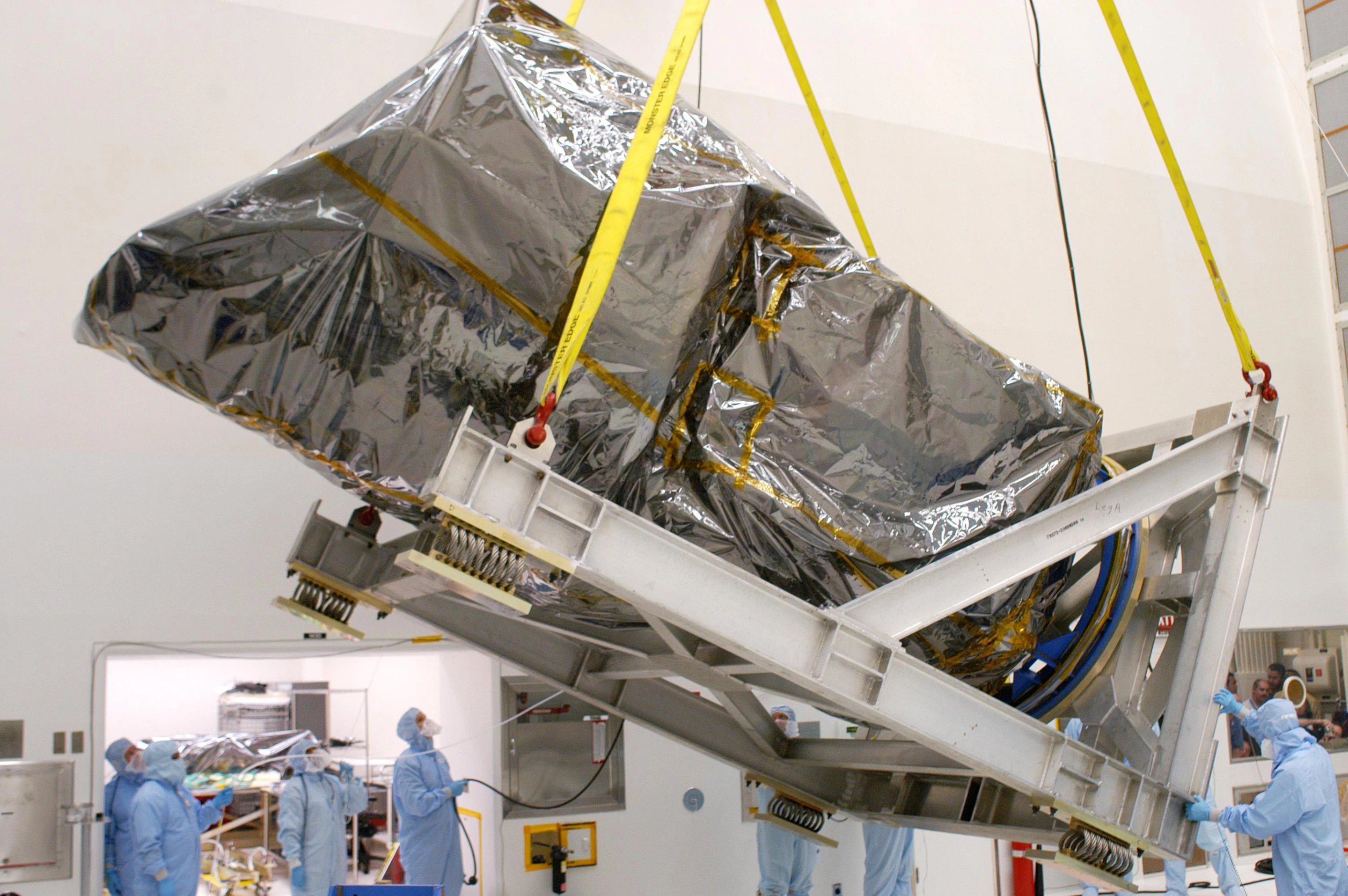
After more than two decades of peering into the most violent events in the solar system, NASA's Reuven Ramaty High Energy Solar Spectroscopic Imager — known as RHESSI — completed its final journey by plunging back through Earth's atmosphere, closing the book on one of the agency's most scientifically productive small spacecraft missions. The 300-kilogram satellite, launched in February 2002 from Cape Canaveral aboard a Pegasus XL rocket, made an uncontrolled reentry on April 19, 2023, at approximately 8:21 p.m. EDT.
The U.S. Department of Defense tracked the descent and confirmed that surviving fragments — a relatively small number of heat-resistant components — landed in a remote stretch of the Sahara Desert, posing no threat to populated areas. No injuries or property damage were reported, and the event passed almost without fanfare despite representing the end of a 21-year scientific legacy.
RHESSI was designed to study the explosive energy releases of solar flares and coronal mass ejections, the violent eruptions of magnetized plasma that blast from the Sun's surface with the force of billions of nuclear bombs. To capture these events, the spacecraft carried an imaging spectrometer capable of recording high-energy X-rays and gamma rays — forms of radiation that Earth's atmosphere absorbs before they can reach ground-based telescopes. By observing from orbit, RHESSI gave scientists their first-ever high-resolution images of solar flares in the high-energy X-ray and gamma-ray spectrum, fundamentally changing how researchers understood these massive explosions and the physical processes driving them.
Solar flares are among the most energetic events in the solar system. They occur when magnetic field lines on the Sun's surface suddenly reconnect, releasing enormous bursts of radiation and accelerating charged particles to nearly the speed of light. These particle streams, when directed toward Earth, can disrupt satellites, interfere with radio communications, damage power grid infrastructure, and endanger astronauts aboard the International Space Station.
Understanding the mechanisms behind solar flares became increasingly urgent as society's dependence on satellite technology, global communications networks, and space-based systems grew. RHESSI's observations provided critical data on how magnetic energy is converted into particle energy during flares, helping scientists refine their models and improve space weather forecasting capabilities. Beyond its primary solar mission, RHESSI made a surprising and landmark contribution to atmospheric science.
Its gamma-ray detectors proved sensitive enough to detect terrestrial gamma-ray flashes, brief but intense bursts of gamma radiation produced within Earth's own atmosphere during powerful thunderstorms. The discovery that ordinary lightning storms could generate gamma-ray bursts with energies approaching those of some astrophysical phenomena was entirely unexpected and opened a new field of atmospheric physics research. Scientists used RHESSI data to study the relationship between lightning, electric fields in storm clouds, and the production of these high-energy flashes, deepening understanding of one of nature's most energetic atmospheric processes.
The spacecraft was decommissioned in August 2018, after communication difficulties made it impossible to reliably command the satellite or receive data. At that point, RHESSI had accumulated more than 16 years of active observations, capturing tens of thousands of solar flare events and contributing to hundreds of scientific publications. Even after its retirement, the spacecraft continued orbiting Earth as a piece of inactive space debris, gradually losing altitude as atmospheric drag slowly pulled it lower over the following years.
By the time of its reentry, RHESSI had completed tens of thousands of orbits around Earth. NASA engineers and debris tracking experts monitored its descent in the final weeks, refining predictions about when and where the spacecraft would reenter. Because RHESSI was an uncontrolled reentry — meaning the spacecraft had no propulsion system to guide it toward a designated ocean splashdown zone — the precise landing location could only be estimated with a margin of several hours before reentry actually occurred.
This uncertainty meant that parts of three continents fell within the potential impact corridor at various points during the final tracking period. As it descended through the atmosphere at hypersonic speeds, the intense friction generated by air resistance heated the outer structure of the spacecraft to thousands of degrees, causing most of the aluminum, plastic, and electronic components to vaporize. Only the most heat-resistant parts, primarily components made from materials with very high melting points, survived the fiery plunge to reach the surface.
The surviving fragments were small and scattered across a remote desert region, where they posed no risk to human life or infrastructure. RHESSI's reentry was a reminder of the growing challenge of space debris management. With thousands of defunct satellites, spent rocket stages, and fragments orbiting Earth, tracking and predicting the uncontrolled reentry of aging spacecraft has become an important responsibility for space agencies and commercial operators alike.
Modern spacecraft are increasingly designed with end-of-life disposal plans that include controlled deorbiting maneuvers to direct remaining debris into ocean splashdown zones far from population centers. The scientific community remembered RHESSI with appreciation for the contributions it made during its operational years. The mission demonstrated the value of focused, relatively small satellite platforms for conducting high-impact scientific observations.
Its observations not only advanced solar physics but also contributed to understanding of particle acceleration, nuclear reactions in solar plasma, and the complex electromagnetic environment surrounding the Sun. The data RHESSI collected continues to be analyzed by researchers around the world, with archives of its observations remaining available for ongoing scientific study. The mission was named in honor of Reuven Ramaty, a pioneering NASA astrophysicist who made foundational contributions to the study of high-energy solar phenomena and cosmic gamma-ray sources before his death in 2001.
His work helped establish the scientific foundations that RHESSI's instruments were designed to build upon, and the mission reflected his vision of using space-based high-energy astronomy to illuminate the most extreme physical processes in the solar system. As RHESSI's final fragments settled into the desert sand, astronomers and space scientists reflected on what the mission had achieved. From revealing the hidden mechanics of solar explosions to discovering unexpected gamma-ray flashes in Earth's own skies, RHESSI produced discoveries that researchers will continue to build on for decades.
Its story — from a small orbital observatory to a trail of glowing debris streaking silently over Africa — represents the complete lifecycle of a space science mission: born of scientific ambition, sustained by precision engineering, and concluded by the same gravity it spent years defying..
Nystate News FavoritesNystate News Favorites
- Netflix and NASA Launch Ambitious New Partnership to Bring Space to ScreensNetflix and NASA Launch Ambitious New Partnership to Bring Space to Screens
- Trapped Under Pressure: How Heat Domes Trigger Dangerous Temperature SurgesTrapped Under Pressure: How Heat Domes Trigger Dangerous Temperature Surges
Read More