business
Global Markets Split as Nvidia Turmoil Drags on AI Stocks
World stock markets traded mixed as fresh uncertainty surrounding Nvidia weighed on artificial intelligence shares, sending Asian tech-heavy benchmarks lower while European indexes held up and U.S. futures wavered.
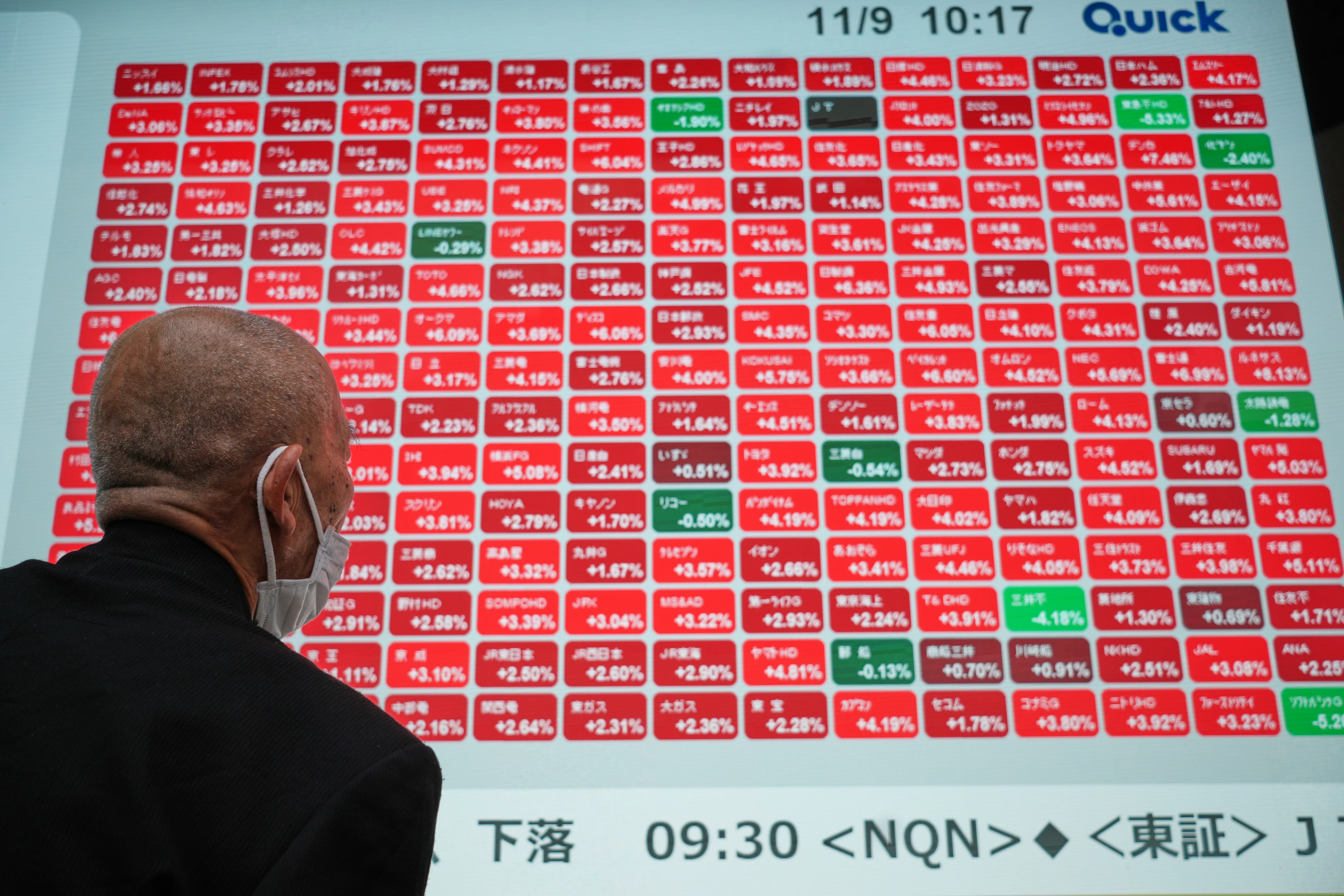
Global stock markets delivered a mixed performance as renewed uncertainty surrounding Nvidia, the chipmaker at the heart of the artificial intelligence boom, weighed heavily on technology shares and rattled investors who have poured hundreds of billions of dollars into AI-linked companies over the past several years. Asian benchmarks mostly finished lower, with technology-heavy markets in Taiwan and Hong Kong, along with Australia, bearing the brunt of the selling as sentiment toward semiconductor and AI stocks cooled. European markets, by contrast, opened mostly higher as investors there attempted to look past the tech-driven slump, while U.S.
stock futures swung between modest gains and losses as Wall Street weighed its next move. The turbulence centered on Nvidia, whose shares slipped in after-hours and pre-market trading following reports about matters facing the company's leadership. The reports raised questions among investors about governance and stability at a company that has become one of the most valuable in the world and a bellwether for the entire AI trade.
Nvidia has not been accused of wrongdoing, and the full details of the situation remained unclear, but the uncertainty alone was enough to unsettle a market that has grown accustomed to treating the chipmaker as a symbol of the AI era's seemingly unstoppable momentum. Nvidia's influence on global markets is difficult to overstate. Its graphics processing units power the vast majority of the data centers used to train and run large AI models, and its quarterly results have become market-moving events watched as closely as central bank decisions.
Because the company carries such enormous weight in major U.S. indexes, and because so many other firms depend on its supply chain, even modest swings in its share price can ripple across continents. In Asia, that effect was immediately visible.
Taiwan's market, home to Taiwan Semiconductor Manufacturing Co., the contract chipmaker that produces Nvidia's most advanced processors, is especially sensitive to shifts in sentiment toward AI hardware. South Korean memory makers, Japanese equipment suppliers and Hong Kong-listed technology giants have likewise become closely tied to the fortunes of the broader AI build-out, leaving the region exposed whenever confidence in the sector wavers. Beyond the company-specific headlines, the pullback reflected deeper and longer-running anxieties about the AI industry.
Investors have increasingly questioned whether the staggering sums that technology companies are spending on AI infrastructure, including new data centers, specialized chips and the electricity needed to power them, will ultimately generate profits large enough to justify the expense. Major cloud providers and technology firms have committed to capital spending plans running into the hundreds of billions of dollars, and while those investments have fueled extraordinary revenue growth for chip suppliers, some analysts warn that expectations may have run ahead of reality. That debate has produced a pattern of alternating sell-offs and rebounds in technology stocks, with investors rotating quickly between optimism about AI's long-term potential and caution over valuations that, by some measures, have reached historically elevated levels.
Periods of strong earnings from cloud and infrastructure providers have repeatedly reignited enthusiasm, only for concerns about spending discipline, competition and regulation to resurface weeks later. Market strategists noted that the concentration of gains in a small group of megacap technology companies has made global indexes particularly vulnerable to company-specific shocks. When a handful of stocks account for an outsized share of an index's value and its gains, negative news affecting any one of them can drag down the broader market, even when most other companies are performing steadily.
That dynamic helps explain why European markets, which have far less exposure to AI and semiconductor giants, were able to move higher while Asian technology benchmarks retreated. Europe's major indexes are weighted more heavily toward banks, energy producers, industrial manufacturers and consumer goods companies, sectors that tend to respond more to interest rates, economic growth and commodity prices than to developments in Silicon Valley. Investors on Wall Street faced a more complicated picture.
Enthusiasm for certain corners of the technology sector remained intact, but traders also had to weigh regulatory pressures, geopolitical tensions and the leadership questions surrounding Nvidia. Ongoing export restrictions on advanced chips to China, trade frictions between major economies and growing government scrutiny of large technology firms have added layers of uncertainty that make it harder for investors to commit decisively in either direction. For individual investors and retirement savers, the episode served as another reminder of how deeply the AI trade has become embedded in global portfolios.
Index funds tracking major U.S. benchmarks now carry substantial exposure to a few technology heavyweights, meaning that turbulence at a single company can affect the savings of millions of people who may not realize how concentrated their holdings have become. Financial advisers have increasingly urged clients to review their diversification as AI-related stocks have grown to dominate market capitalization.
Despite the jitters, many analysts cautioned against reading too much into a single session of mixed trading. Demand for AI computing power remains strong by most measures, major technology companies continue to report robust investment plans, and Nvidia's products remain central to the industry's infrastructure. Some strategists argued that periodic pullbacks are a healthy feature of a maturing market, helping to cool speculative excess and bring valuations closer to underlying fundamentals.
Still, the day's trading underscored how sensitive global markets have become to developments at a single company. As investors await greater clarity on the situation surrounding Nvidia and continue to assess whether the AI boom can deliver the returns its champions have promised, volatility in technology shares is likely to remain a defining feature of markets in the weeks ahead. Whether the latest wobble proves to be a brief pause or the start of a broader reassessment of the AI trade may depend on what Nvidia, its rivals and its biggest customers reveal in the coming months..
Nystate News FavoritesNystate News Favorites
- Senate Republican Tax Proposal Sparks Outcry from Renewable Energy AdvocatesSenate Republican Tax Proposal Sparks Outcry from Renewable Energy Advocates
- Buy Now, Pay Later Loans to Be Reflected in Credit Scores for the First TimeBuy Now, Pay Later Loans to Be Reflected in Credit Scores for the First Time
Read More