technology
Trump Signs Executive Order Expanding National Security Reviews of Advanced AI Models
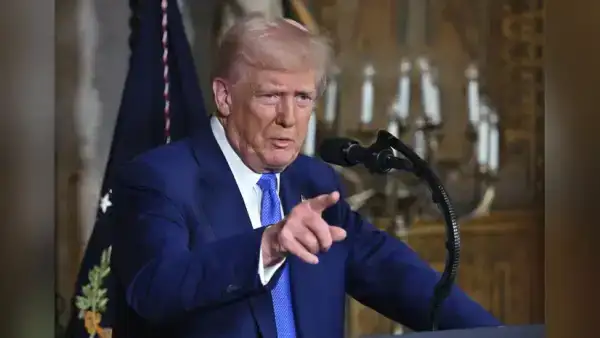
President Donald Trump signed a new executive order directing federal agencies to evaluate advanced artificial intelligence models for potential national security risks, cybersecurity threats, and foreign influence concerns.
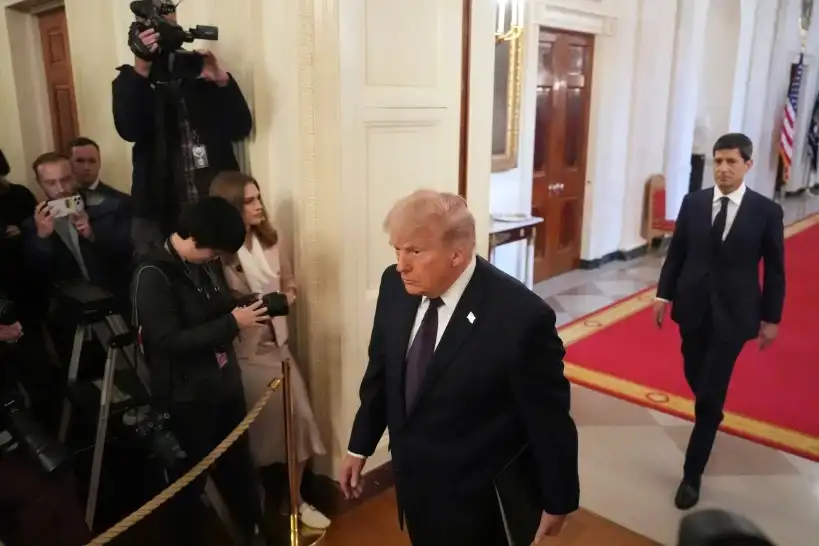
President Donald Trump signed a sweeping executive order aimed at increasing federal oversight of advanced artificial intelligence systems, directing government agencies to evaluate leading AI models for potential national security threats, cybersecurity vulnerabilities, and risks tied to foreign influence or misuse. The order marks one of the administration’s most significant actions on artificial intelligence policy and reflects growing concerns in Washington over the rapid expansion of powerful generative AI technologies that are increasingly influencing defense systems, communications infrastructure, financial markets, and critical government operations. The executive order calls for closer coordination between federal agencies, intelligence officials, cybersecurity experts, and private technology companies involved in developing large-scale AI systems.
Administration officials said the initiative is designed to ensure that highly advanced AI platforms do not pose threats to national security interests or become tools for cyberattacks, misinformation campaigns, surveillance operations, or unauthorized foreign access to sensitive data. The order reportedly encourages federal reviews of frontier AI models capable of handling advanced reasoning, autonomous decision-making, software generation, and large-scale data analysis. The White House said the policy aims to balance technological innovation with national security protections as competition intensifies between the United States and other global powers in the race to dominate artificial intelligence development.
Officials have increasingly warned that AI systems could be exploited by hostile governments, cybercriminal organizations, or malicious actors seeking to target infrastructure, financial institutions, military systems, or democratic processes. The administration also emphasized concerns about AI-generated disinformation, deepfake technology, automated hacking capabilities, and the use of advanced AI tools in biological or chemical research. Under the executive order, several federal departments are expected to review how AI developers manage data security, system transparency, safety testing, and risk mitigation protocols before advanced models are deployed at scale.
Agencies may also examine whether certain AI technologies require stricter reporting standards, export controls, or safeguards tied to national defense interests. The order invites increased collaboration with the private sector while encouraging companies to voluntarily share information related to safety assessments, model capabilities, and potential misuse risks. Technology leaders and policy experts have long debated how governments should regulate artificial intelligence without slowing innovation or weakening competitiveness.
Supporters of stronger oversight argue that AI systems are advancing faster than existing regulations and could create serious risks if left unchecked. They point to growing concerns over autonomous cyberattacks, election interference, manipulation of public information, and the concentration of powerful AI tools in the hands of a small number of corporations or foreign adversaries. Critics, however, caution that excessive regulation could limit innovation, discourage investment, and create uncertainty for technology companies developing next-generation AI systems.
Some industry leaders have argued that collaborative standards and international agreements may be more effective than aggressive government intervention, particularly as AI development increasingly operates across global markets and research networks. The executive order arrives amid intensifying global competition over artificial intelligence leadership, with the United States, China, and several European nations racing to establish regulatory frameworks while investing heavily in AI infrastructure, semiconductor manufacturing, and advanced computing systems. Artificial intelligence has become a major geopolitical issue as governments recognize its potential impact on military strategy, economic growth, cybersecurity, healthcare, scientific research, and industrial productivity.
National security experts have repeatedly warned that advanced AI systems could reshape modern warfare and intelligence operations through autonomous drones, predictive analytics, surveillance systems, and cyber defense technologies. Concerns have also grown over the possibility of AI-generated misinformation influencing elections, public opinion, and international relations through increasingly realistic synthetic media and automated propaganda tools. The administration said the executive order represents an early step toward building a broader national strategy for artificial intelligence governance, safety, and innovation.
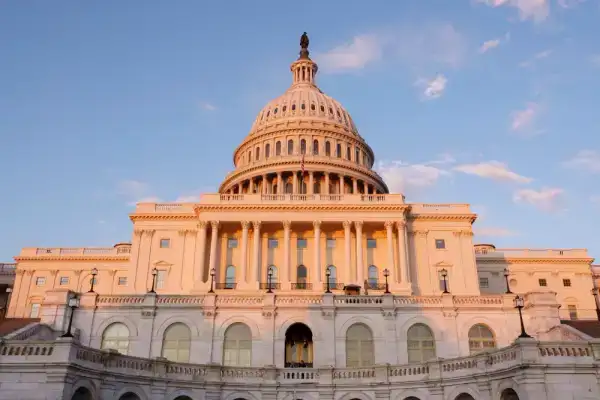
Federal agencies are expected to provide recommendations in the coming months regarding additional safeguards, testing standards, and security protocols for advanced AI development. The policy is also likely to intensify debates in Congress over whether lawmakers should pursue broader legislation regulating artificial intelligence companies, data privacy, and algorithmic accountability. As governments worldwide struggle to keep pace with rapid advances in AI technology, the executive order highlights how artificial intelligence is increasingly being viewed not only as a transformative economic force but also as a critical national security issue capable of reshaping global power dynamics in the years ahead..
Nystate News FavoritesNystate News Favorites
Read More