politics
Billionaire Tom Steyer’s Record Ad Spending Reshapes California Governor’s Race
Billionaire activist Tom Steyer shattered advertising spending records in California’s governor’s race, flooding television, digital platforms, and social media with campaign ads as rivals accused him of trying to buy political influence.
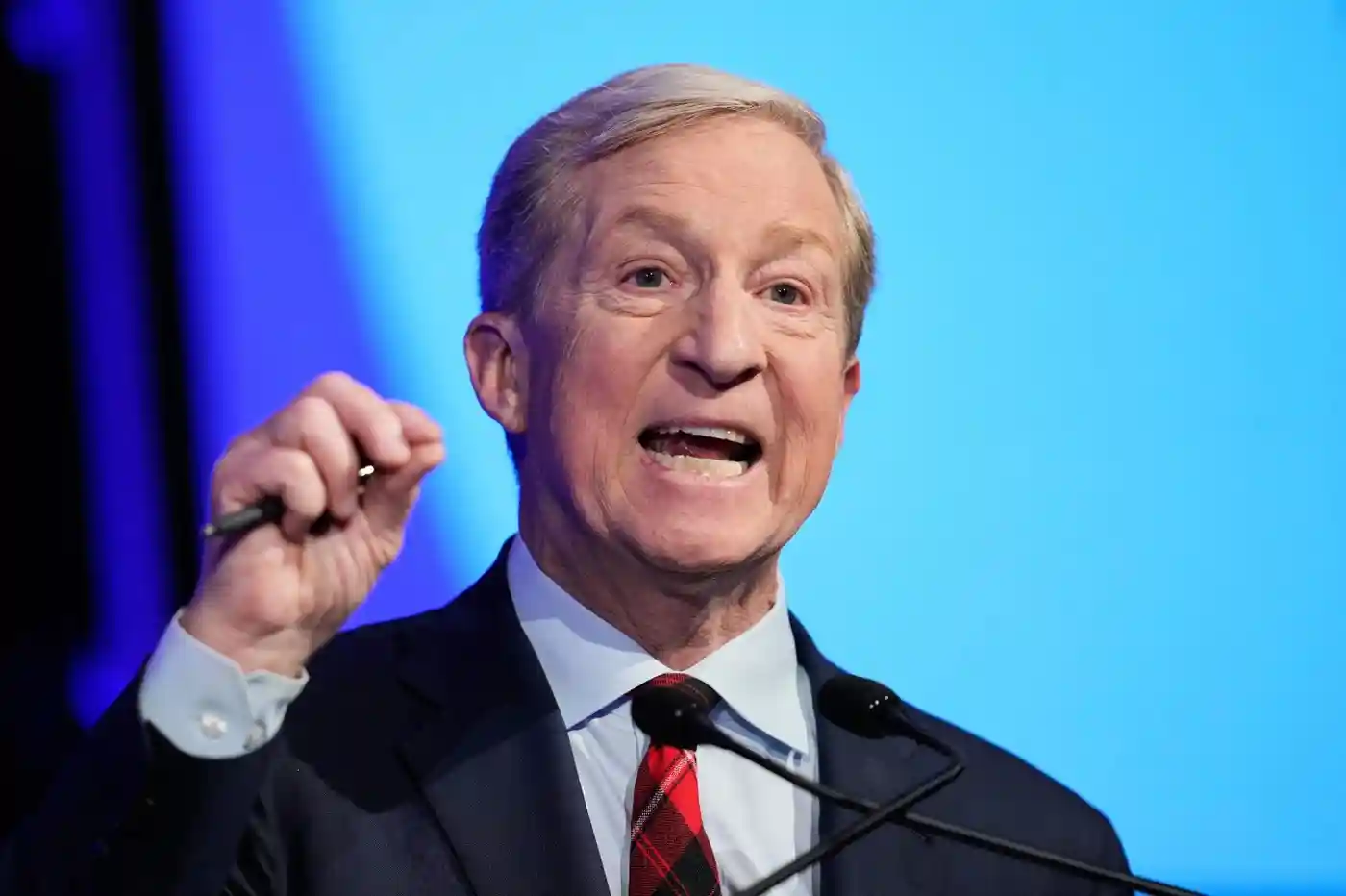
Billionaire investor and political activist Tom Steyer dramatically transformed the California governor’s race by unleashing a record-breaking advertising campaign that overwhelmed television screens, digital platforms, streaming services, radio broadcasts, and social media feeds across the state, intensifying debate over the growing influence of personal wealth in American politics while reshaping one of the country’s most closely watched gubernatorial contests. Steyer, the former hedge fund manager turned climate activist and Democratic political donor, spent unprecedented amounts of money on campaign advertising in an effort to position himself as the leading candidate to replace term-limited Governor Gavin Newsom, creating what analysts described as one of the most expensive and aggressive self-funded state campaigns in modern American political history. Data from political advertising trackers and campaign finance disclosures showed that Steyer’s spending dwarfed every other candidate in the crowded field, with estimates placing his ad expenditures well above one hundred million dollars and some reports suggesting the total could approach two hundred million dollars before the primary election concluded.
His campaign saturated California media markets with polished television commercials, targeted mobile advertisements, influencer-driven online promotions, multilingual outreach campaigns, and extensive social media content designed to reach voters across demographic and geographic groups. The advertising blitz quickly became the defining feature of the race, with political observers noting that Steyer’s ads appeared nearly everywhere voters turned, from prime-time television broadcasts and YouTube videos to Instagram feeds, podcasts, streaming platforms, and digital news websites. Supporters argued that the spending allowed Steyer to communicate directly with voters about issues such as housing affordability, climate change, utility costs, education reform, healthcare access, and economic inequality, while critics accused him of attempting to purchase political power through financial dominance rather than grassroots support.
Rival candidates repeatedly attacked the billionaire’s spending during debates and campaign appearances, warning voters that California’s highest office should not effectively be auctioned to the wealthiest contender. Former Representative Katie Porter and former Health and Human Services Secretary Xavier Becerra both criticized Steyer’s campaign tactics, suggesting that no candidate should be able to dominate public attention simply because of personal fortune. Despite the criticism, Steyer defended his self-funded campaign by arguing that using his own wealth allowed him to avoid dependence on corporate donors, lobbyists, and special interests.
He emphasized his history of environmental activism, political organizing, and progressive advocacy, claiming that his campaign reflected a genuine effort to solve California’s affordability crisis, rising utility costs, homelessness challenges, insurance market instability, and climate-related disasters. The race itself emerged as one of the most unpredictable political contests in recent California history due to the absence of a clear Democratic frontrunner after Governor Gavin Newsom reached term limits and several nationally recognized Democrats declined to enter the race. California’s unique “top two” primary system added further uncertainty by allowing only the two candidates receiving the highest vote totals to advance to the general election regardless of party affiliation.
With more than fifty candidates participating in the race, Steyer’s advertising dominance became an essential strategy for standing out in a fragmented political environment where voter attention was divided among numerous Democratic, Republican, and independent contenders. Political analysts observed that Steyer’s campaign reflected broader changes in modern political communication, particularly the increasing importance of digital advertising, algorithm-driven targeting, and influencer partnerships. Reports revealed that the campaign invested heavily in paid social media influencers, online personalities, and digital content creators who promoted Steyer’s message to younger audiences across platforms such as TikTok, Instagram, YouTube, and X.
This strategy sparked controversy after accusations emerged that some influencers failed to properly disclose paid political sponsorships as required by California law. Complaints filed with the California Fair Political Practices Commission alleged that some sponsored content blurred the line between authentic personal endorsement and paid advertising, raising ethical and legal questions about transparency in digital campaigning. Steyer’s campaign defended the influencer outreach as an innovative way to communicate with voters who increasingly consume political information online rather than through traditional television or newspapers.
Critics, however, argued that the tactic highlighted the growing commercialization of political discourse and the potential for wealthy candidates to dominate digital spaces through financial power. The sheer scale of Steyer’s spending also reignited longstanding national debates over money in politics, billionaire influence, campaign finance regulation, and democratic fairness. Some political strategists pointed to historical examples of wealthy candidates who failed despite massive spending, including former eBay executive Meg Whitman’s unsuccessful 2010 California gubernatorial campaign and Steyer’s own failed 2020 presidential bid, during which he spent hundreds of millions of dollars without winning significant electoral support.
Analysts noted that although money can dramatically increase candidate visibility, advertising alone does not guarantee voter trust, emotional connection, or electoral success. Polling throughout the campaign showed that despite Steyer’s overwhelming financial advantage, the race remained relatively competitive, with several Democratic candidates maintaining strong support among key voter groups. Surveys suggested that many Californians remained skeptical of billionaire candidates regardless of political ideology, particularly at a time when housing costs, inflation, and economic inequality remained major public concerns.
Some voters questioned whether an ultra-wealthy hedge fund founder could genuinely understand the financial struggles faced by working-class Californians, renters, small business owners, and middle-income families. Steyer attempted to address these concerns by emphasizing his middle-class upbringing, philanthropic work, environmental advocacy, and policy proposals focused on affordability and economic reform. He also promoted plans to reduce electricity costs, challenge utility monopolies, expand affordable housing construction, strengthen climate resilience infrastructure, and improve public education funding.
Opponents countered that many of his proposals lacked clear implementation details and accused him of relying on slogans rather than realistic governance strategies. The campaign’s extraordinary spending levels also triggered massive reactions from outside political groups, unions, corporations, and independent expenditure committees seeking either to support or oppose Steyer’s candidacy. Real estate organizations, construction industry groups, utility interests, labor unions, and business associations poured millions of additional dollars into advertising campaigns attacking Steyer’s record, particularly his past investments in fossil fuels, private prisons, and controversial corporate ventures during his hedge fund career.
Critics argued that Steyer’s attempts to present himself as a progressive reformer conflicted with aspects of his financial history, while supporters insisted that his evolution into a climate activist demonstrated personal growth and commitment to public service. Political commentators observed that the governor’s race increasingly resembled a high-stakes media war in which advertising volume, online influence, and viral messaging often overshadowed traditional grassroots organizing and policy-focused debate. Television stations, streaming companies, digital publishers, and social media platforms benefited financially from the flood of political advertising, with some analysts describing the California race as one of the most lucrative political media events outside of presidential elections.
Local news broadcasts, sporting events, and entertainment programming were frequently interrupted by competing campaign advertisements as candidates battled for voter attention during the final months before the primary election. Steyer’s campaign reportedly spent especially heavily in expensive media markets such as Los Angeles, San Francisco, Sacramento, and San Diego, ensuring constant visibility among millions of California voters. The political environment surrounding the race became even more volatile due to scandals, shifting endorsements, and strategic uncertainty among Democratic leaders concerned about the possibility of Republican candidates advancing under the top-two primary system.
Governor Newsom’s refusal to endorse a successor added to party anxiety and intensified competition among Democratic candidates seeking to consolidate support. Republican candidate Steve Hilton also emerged as a significant factor in the race, benefiting from Democratic fragmentation and growing voter frustration over economic and public safety concerns. Some Democratic strategists worried that divisions among liberal candidates could allow Hilton to secure a general election position if Democratic votes were split too widely.
Meanwhile, grassroots activists and progressive organizations debated whether Steyer’s wealth should be viewed as an asset that could help defeat conservative opponents or as evidence of excessive billionaire influence over democratic institutions. The race also became a testing ground for broader Democratic Party debates involving economic populism, climate policy, technological disruption, housing reform, and the future direction of liberal governance in one of America’s most influential states. California’s political decisions often shape national policy conversations due to the state’s enormous economy, population size, and cultural influence, making the governor’s race particularly significant beyond state borders.
Steyer positioned himself as both an outsider capable of challenging entrenched interests and a pragmatic progressive focused on delivering measurable results. He repeatedly argued that California required bold leadership to address housing shortages, wildfire risks, utility costs, insurance market instability, transportation challenges, and economic inequality. Yet critics insisted that no amount of advertising could fully overcome public skepticism regarding concentrated wealth and political power.
Political scientists noted that the campaign highlighted the increasingly blurred boundaries between entertainment marketing, corporate branding, influencer culture, and electoral politics in the digital era. Steyer’s advertisements often featured cinematic production quality, emotionally driven storytelling, data-targeted messaging, and highly personalized outreach strategies designed to maximize voter engagement. The use of influencers, online creators, and social media amplification reflected a broader shift away from traditional campaign communication models toward digitally integrated political branding strategies.
As election day approached, uncertainty continued to dominate the race despite Steyer’s historic spending advantage. Polls suggested that many voters remained undecided or only loosely committed to candidates, reflecting broader dissatisfaction with politics, economic anxiety, and ideological fragmentation within the Democratic electorate. Analysts concluded that the outcome of the race would provide important insights into whether massive self-funded campaigns can truly overcome voter skepticism in an era of rising concern about wealth inequality and political influence.
Regardless of the final result, Tom Steyer’s unprecedented advertising campaign permanently altered the dynamics of the California governor’s race, setting new benchmarks for political spending, redefining digital campaign strategy, and intensifying national debates about money, democracy, media influence, and the future of electoral politics in the United States..
Nystate News FavoritesNystate News Favorites
- Federal Judge Lifts Order Halting Deportation of Family Tied to Boulder Firebomb SuspectFederal Judge Lifts Order Halting Deportation of Family Tied to Boulder Firebomb Suspect
- Trump's Brazil Tariff Threat Pushes Legal Boundaries of Presidential Trade AuthorityTrump's Brazil Tariff Threat Pushes Legal Boundaries of Presidential Trade Authority
Read More